
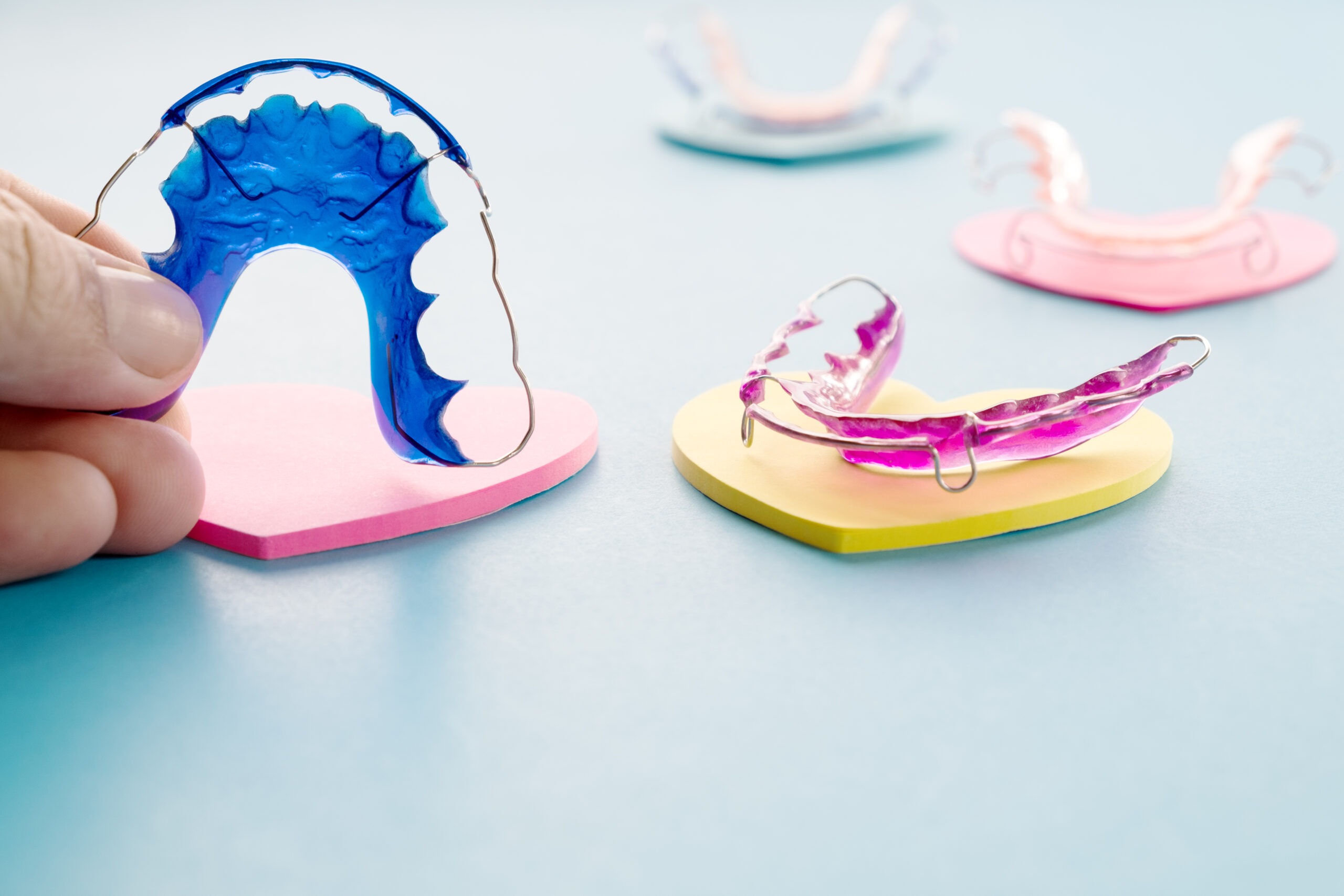
A palatal expander is a custom-fitted orthodontic appliance that gradually widens the upper jaw. It is most often used in growing children, and it works by taking advantage of the fact that the two halves of the upper jaw have not yet fused together.
If your child has been recommended an expander, or you have just started hearing the word at dental visits, this post covers what the appliance is, how it works, what the daily routine looks like at home and what you can expect from start to finish. At Align Orthodontics, expanders are one of the most common appliances we use in early treatment, and they are also one of the most misunderstood.
What Is a Palatal Expander?
A palatal expander, sometimes called a palate expander, is an appliance that widens the maxilla, which is the upper jaw. Down the middle of the roof of your mouth runs a seam called the midpalatal suture. In children and younger teens that seam has not closed yet, so applying steady outward pressure separates the two halves slightly and new bone fills in the gap.
That window is the whole reason timing matters. The suture typically begins fusing somewhere in the mid to late teens, though it varies quite a bit from person to person. Before it closes, expansion is a gentle, routine procedure. After it closes, widening the jaw takes a different appliance and sometimes a surgical assist.
Why an Expander Gets Recommended
- Correcting a crossbite. When the upper teeth bite inside the lower teeth, a narrow upper jaw is usually the reason.
- Creating room for crowded teeth. Widening the jaw makes space for permanent teeth to come in where they belong, which can reduce the chance of extractions later.
- Correcting a narrow upper arch. Some upper jaws are simply too narrow for the lower jaw they have to meet, which affects how the whole bite functions.
- Supporting airway development. In some cases widening the palate also opens the floor of the nasal passages. Research here is still developing, so we treat this as a possible benefit rather than a reason on its own.
Expansion is a proactive treatment. Addressing a narrow jaw at eight or nine is a straightforward appliance. Addressing the same problem at eighteen is a much larger conversation. That is why the American Association of Orthodontists suggests a first orthodontic exam around age seven, well before most families think they need one.
How Does a Palate Expander Work?
The expander is bonded to the upper molars and sits against the roof of the mouth. In the center of the appliance is a small screw mechanism. Turning that screw applies gentle outward pressure to both halves of the upper jaw, and the jaw responds by separating a fraction of a millimeter at a time.
Each turn is tiny, usually about a quarter of a millimeter. That sounds like nothing, and on its own it is. Repeated once or twice a day for a few weeks, it adds up to the width the treatment plan called for.
Turning the Key at Home
Most of the work happens at your kitchen table rather than in our office, which surprises a lot of parents. You will be given a small key and shown exactly how to use it before you leave with the appliance.
The routine is short. Have your child lie back with their head tilted so you can see into the mouth, and use a bright light. Insert the key into the visible hole in the center screw and push it toward the back of the throat until the next hole rotates into view at the front. Then slide the key straight out, backward, so you do not accidentally reverse the turn you just made.
A few things that make this easier:
- Pick a consistent time. Most families do it right before bed, which means any pressure your child feels happens while they are falling asleep.
- Count out loud. Missed turns and doubled turns both throw off the schedule, and it is easy to lose track.
- Do not make up a missed turn. Skip it and carry on with the normal schedule, then let us know at the next visit.
- Call if the key slips or you cannot find the next hole. That is a five minute fix in our office and not something to guess your way through.
What to Expect During Treatment
- A sensation of pressure. After each turn your child may feel pressure behind the nose, across the roof of the mouth or along the cheekbones. It typically fades within several minutes.
- Speech and eating adjustments. A temporary lisp and a strange swallowing feeling are both normal at first. Most kids sound like themselves again within a few days, and talking through it speeds that along.
- Extra saliva. The mouth reads a new appliance as something to wash away. This settles within a week.
- A gap between the front teeth. A space often opens between the two upper front teeth as the jaw widens. This looks alarming and is actually the clearest sign the expander is working. Braces or aligners later in treatment close it.
How Long the Whole Process Takes
There are two phases and families often only hear about the first one. The active phase, when you are turning the key, usually runs two to four weeks. That is the part with a visible change.
The retention phase is longer and just as important. The appliance stays in place for several months after the last turn, often four to six, while new bone fills the space that opened up and hardens. Removing an expander early lets the jaw drift back toward where it started, which undoes the work. This is why the appliance sits in the mouth long after anything seems to be happening.
Types of Palatal Expanders
Not every expander is the same appliance, and which one your child gets depends on age, the amount of expansion needed and what else is happening in the mouth.
- Rapid palatal expanders. The most common type. Fixed to the upper molars, turned once or twice daily, and used for most growing children.
- Slow expanders. The same idea with lighter force over a longer period. Sometimes chosen for children who are sensitive to pressure or for cases needing less correction.
- Removable expanders. An acrylic plate the patient takes in and out, suited to smaller corrections. Results depend heavily on wearing it consistently.
- MARPE. Miniscrew-assisted rapid palatal expansion, which anchors to small screws in the bone rather than to the teeth. This is what makes expansion possible for older teens and some adults whose suture has already fused.
Which one is right is a clinical call, and Dr. Kunkel or one of our other orthodontists will walk you through the reasoning at your consultation rather than just handing you an appliance.
Eating, Cleaning and Living With an Expander
The first two or three days are the adjustment period. Soft foods help. Think pasta, eggs, yogurt, soup that has cooled, anything that does not require much work. After that most kids eat normally again.
A few things do need to stay off the menu while the appliance is in, because they can bend the wires or pull it loose:
- Sticky candy, caramel, taffy and gum
- Hard candy and ice
- Popcorn, nuts and hard pretzels
- Corn on the cob and whole apples, unless cut off the cob or into pieces
Cleaning matters more than usual, because food collects around and under the appliance where a toothbrush does not reach easily. Brushing after meals, rinsing with water, and using a water flosser or a syringe to flush under the expander all help. If you notice a smell, that is trapped food rather than the appliance itself, and better flushing usually solves it.
Do Expanders Come Before Braces?
Usually, yes. An expander creates the space and the jaw relationship. It does not straighten individual teeth. Those are two different jobs and they happen in that order.
People often search for expander braces as though it were one appliance, and in practice the two do frequently appear together. It is common for a child to wear an expander with a partial set of braces on the front teeth, or to finish expansion and then move into full braces or clear aligners once the permanent teeth have come in. There is often a waiting period in between while the rest of the adult teeth arrive.
This staged approach is what early orthodontic treatment looks like. The first phase handles growth and space, and the second handles alignment.
Is an Expander Only for Kids?
Expanders work best while the jawbones are still developing, but the door does not slam shut on a birthday. Teens whose suture has partially fused are often still candidates, sometimes with a MARPE appliance rather than a conventional one.
For adults whose suture has fully closed, conventional expansion will not separate the jaw. The options become MARPE, which uses bone anchors to generate enough force, or surgically assisted rapid palatal expansion, where an oral surgeon weakens the bone first so the appliance can do its work. Both are real options and both are bigger undertakings than a childhood expander. If you are an adult wondering where you stand, our page on orthodontics for all ages covers what treatment looks like later in life.
Benefits of Early Expansion
- Helps permanent teeth erupt into better positions
- Reduces the likelihood of tooth extractions later
- Improves bite and jaw alignment
- May support healthier nasal breathing
- Often shortens the second phase of orthodontic treatment
Common Questions About Palatal Expanders
Does a palatal expander hurt?
Most children describe pressure rather than pain. After each turn there is a tight feeling behind the nose and across the roof of the mouth that usually eases within a few minutes. Sharp or lasting pain is not expected, and if your child reports it, call us rather than continuing the turns.
How long does my child wear the expander?
The active turning phase runs two to four weeks in most cases. The appliance then stays in for several more months, often four to six, while new bone forms and hardens in the space that opened. Taking it out early allows the jaw to narrow again.
Why has a gap opened between my child’s front teeth?
Because the expander is working. As the two halves of the upper jaw separate, the front teeth separate with them. The gap is temporary and gets closed later with braces or aligners. Its appearance is one of the clearest confirmations that expansion is happening.
What if I miss a turn?
Skip it and resume the normal schedule at the next turn. Do not double up to catch up, since that applies more force than the plan intends. Mention it at your next appointment so we can account for it.
Will my child speak normally with an expander?
There is usually a lisp for the first few days while the tongue learns to work around the appliance. It resolves on its own, and encouraging your child to read aloud or just talk more shortens the adjustment.
Can adults get a palate expander?
Yes, though not the same way children do. Once the midpalatal suture has fused, expansion requires either a miniscrew-anchored appliance or a surgically assisted approach. Both work. Both are more involved than treating the same issue at nine years old, which is the argument for an early evaluation.
Final Thoughts
Palatal expanders solve a problem that gets significantly harder to solve with age. If your child has a crossbite, a narrow upper jaw or crowding that has your dentist raising an eyebrow, an evaluation is worth doing sooner rather than later, even if the answer turns out to be that nothing needs to happen yet.
We build every treatment plan around the individual child, their growth pattern and what you actually want out of treatment. If you have questions or want a look, schedule a free consultation at our Noblesville or Tipton office and we will give you a straight read.